This was not primarily a software-interface problem. It was an operating-model problem.
The product challenge was to understand which pharmacy activities belong together, which responsibilities must remain distinct, and how the information between them should connect — and then to translate that operating model into a usable platform.
Nothing here began as a decision to build software. It began in years of running pharmacy operations and meeting the same problems in different places: stock and purchasing judged apart from each other, compliance obligations tracked beside the work rather than inside it, and management visibility assembled after the fact. A recurring problem is a product question; a one-off is not. That distinction is what this platform came out of.
Everything else in this portfolio is a piece of that question answered at smaller scale: a commercial framework, an analysis, a controlled workflow. IMTISUITE is the same reasoning applied to the shape of an operation as a whole.
IMTISUITE reflects the same principle that guides my broader work: technology should support better business decisions and stronger operations, not exist for its own sake.
Operator → Analyst → Designer → Builder
Domain expertise decided what the platform had to understand. Analysis decided what the domains genuinely share. Product judgement decided what to connect and what to keep apart. Building it decided whether any of that survived contact with the operation.
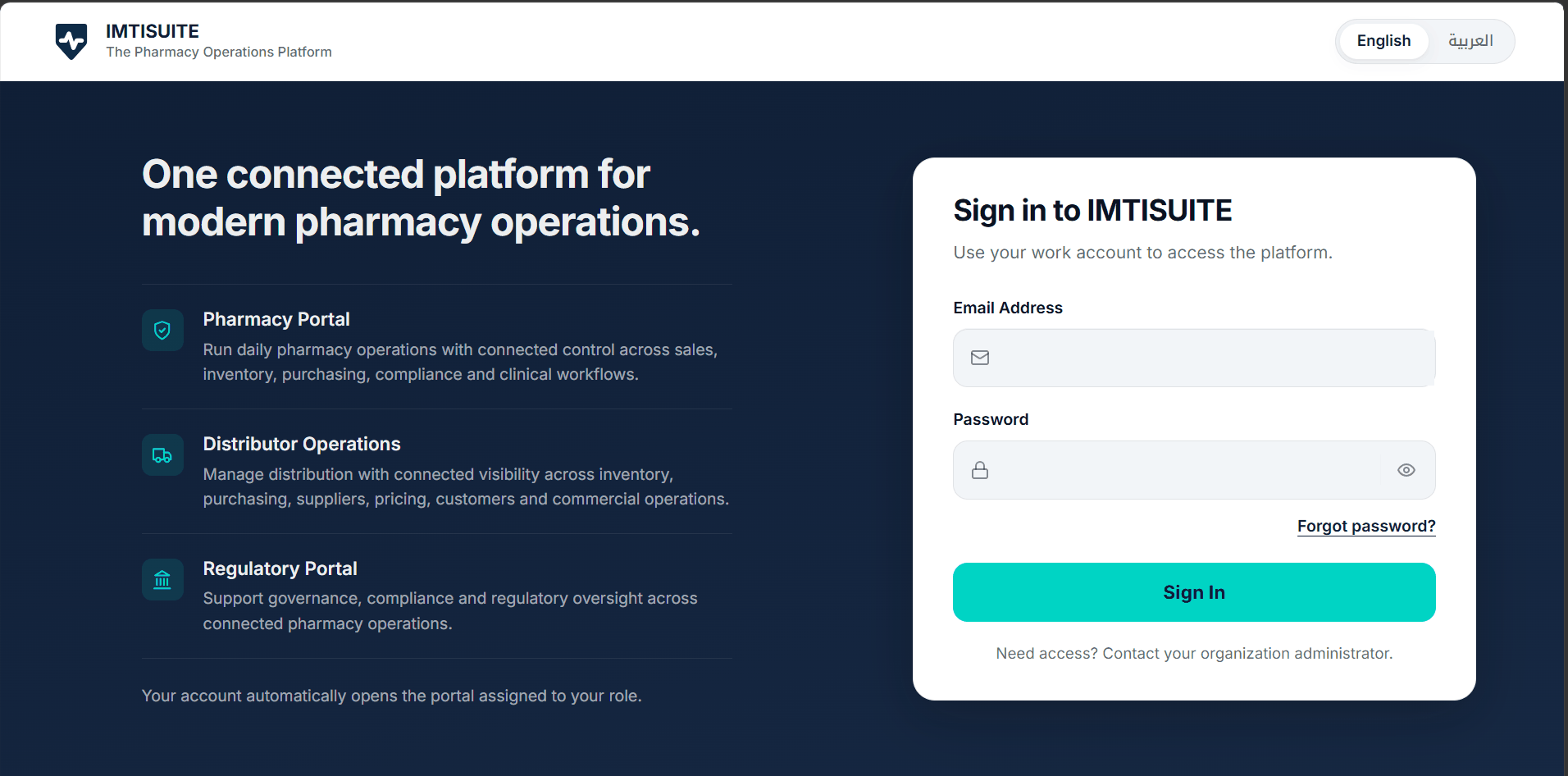
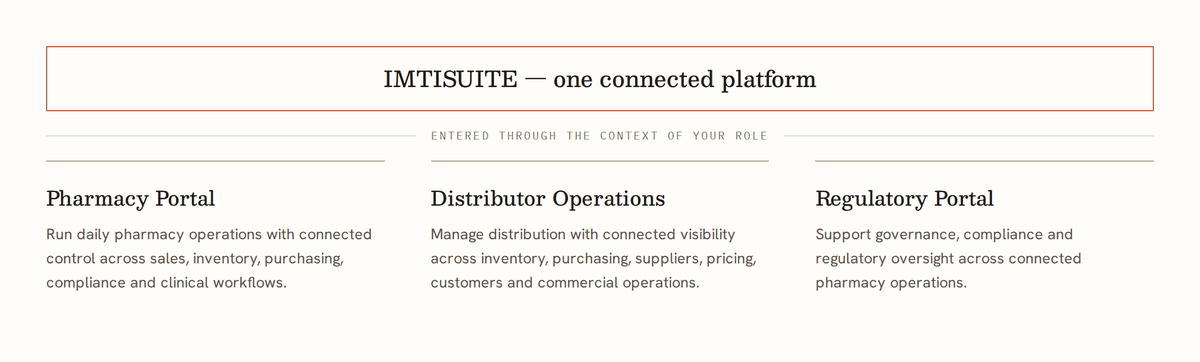
This case study describes a product and its architecture. No customer, organisation, operational record, credential, internal identifier or unreleased commercial information appears. The platform entry is an implemented product view with account details removed; the architecture, domain and method visuals are editorial diagrams of the product structure rather than depictions of software.